
Ask ten people the difference between tree lopping and pruning and you may get ten different answers. The words are often used as if they mean the same thing, but they describe different approaches to cutting a tree, and the choice can decide whether the tree stays healthy or slowly declines. This guide explains what each term means, when each is the right choice, what goes wrong when the cutting is done badly and how to pick a service that explains its plan.
What tree lopping means
The phrase is used so widely that tree lopping across Perth can mean very different things depending on who does the work. In general, lopping means cutting back large branches, or sometimes the whole crown, to reduce the size or height of a tree. The cuts are often made part way along a limb and not at a natural junction, which can leave stubs.
Lopping is a common request because the reasons are practical: a tree is blocking light, overhanging a roof, growing toward powerlines or simply bigger than the space allows. In some cases it is the quickest way to restore clearance, and for certain species and situations it is a reasonable choice. The concern is not the term itself but the way the cuts are made, and how much is taken off.
What pruning involves
Pruning is more selective. The aim is to improve the health, structure or safety of the tree by removing particular branches for particular reasons. Typical goals include:
- Removing dead, diseased or damaged branches.
- Thinning crowded growth so that light and air can pass through.
- Reducing the weight on a branch that is too long or poorly attached.
- Shaping a young tree so that it develops a strong structure as it grows.
- Maintaining clearance from a roof, a window or a path.
Good pruning cuts are made at the right point, close to where the branch joins another, so that the tree can seal the wound naturally. The Australian Standard AS 4373, which covers the pruning of amenity trees, sets out recommended practice and is a useful reference when you ask a tree service how they plan to cut.
When each approach makes sense
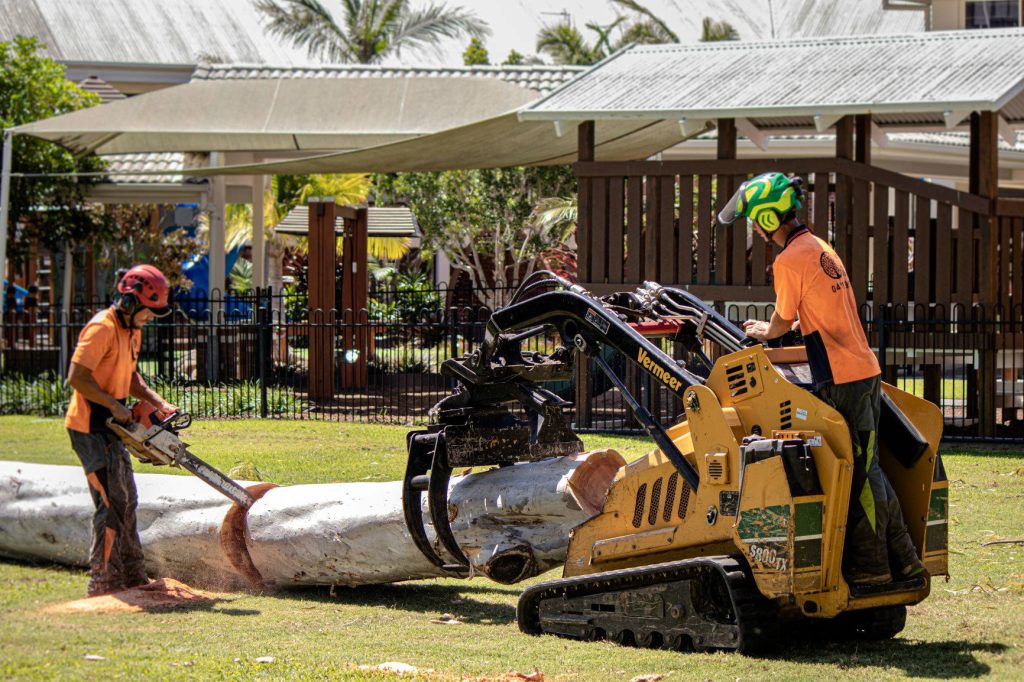
Neither approach is right for every tree. The choice depends on the species, the size and age of the tree, the condition it is in and the problem you are trying to solve.
- Clearance from powerlines. This needs careful planning and qualified crews. It is not a job for homeowners, and your network operator can advise on what applies.
- Storm damage. Broken or hanging branches should be removed promptly, and a proper cut at the right point helps the tree recover.
- Overgrowth and shade. If a tree has simply grown bigger than its space, selective pruning can often reduce the size without harming the tree. In more severe cases, heavier reduction may be needed.
- Health and structure. If the aim is to improve the long term condition of the tree, careful pruning is nearly always the better approach.
- Safety and risk. Where a tree has structural problems that cannot be solved by cutting, a different option such as removal may be better.
Lopping is sometimes the right call, particularly where the priority is fast clearance for safety reasons. It should not be the default, and it should be something you choose with your eyes open about the trade offs.
The risks of poor cutting
Heavy or poorly placed cuts can cause problems that show up months or years later:
- Large wounds and stubs can allow decay to enter the tree, weakening the branch or trunk over time.
- Weak regrowth. Many trees respond to heavy cutting by sending up a mass of fast growing shoots. These shoots are often poorly attached and more likely to break in strong wind than the branches they replaced.
- Stress and decline. Removing a large portion of a tree’s foliage reduces its ability to produce food, and some trees do not recover.
- A bigger problem later. A tree that has been cut back hard may end up less stable than before, which can mean a larger risk and a larger bill down the track.
- Poor appearance. A tree cut back to bare limbs can take years to regain a natural shape, and some never do.
Timing and how often
The best time to cut depends on the species, the climate and the reason for the work. Some trees tolerate cutting at almost any time, while others do better in particular seasons, such as after flowering. Dead or dangerous branches should be dealt with promptly regardless of the season.
How often a tree needs attention also varies. Fast growing species may need regular maintenance, while slower ones can go for years. A professional can recommend a schedule once they have seen the tree. It is generally better to carry out smaller, regular cuts than to wait until the tree is overgrown and then take off a large amount at once.
How to choose a tree service
Because the terms are used loosely, the safest approach is to ask questions. Before you agree to any work, consider:
- What will you cut, and why? A good provider can explain what they plan to remove and the reason for each cut.
- How much of the tree will be taken off? Be cautious if a large proportion of the foliage is to be removed in one go.
- Where will the cuts be made? Ask whether they follow recognised practice, including AS 4373.
- Are you insured? Ask for evidence of public liability insurance before work begins.
- What qualifications and experience do your crew have? Formal training in arboriculture is a good sign.
- What is included in the quote? Check whether clean up, green waste removal and any stump work are included.
A written quote that describes the work in plain terms is a good sign. If a provider gives only a vague answer, or pushes you to approve a heavy cut without explaining why, get a second opinion.
Check your local council’s requirements as well. Rules about cutting protected or significant trees differ between areas, and trees on the verge are generally the council’s responsibility. It is much easier to check first than to deal with a penalty afterwards.
Ask what is planned before the cutting starts
The difference between lopping and pruning is not just a matter of words. It is about how much is taken off, where the cuts are made and what the tree needs to stay healthy and safe. Lopping can be the right tool in the right situation, but pruning is usually kinder to the tree. Ask what is planned, why it is needed and how the tree is likely to respond. A clear answer is a good sign that you have found someone who understands trees and not just chainsaws.